 Datum Design Journal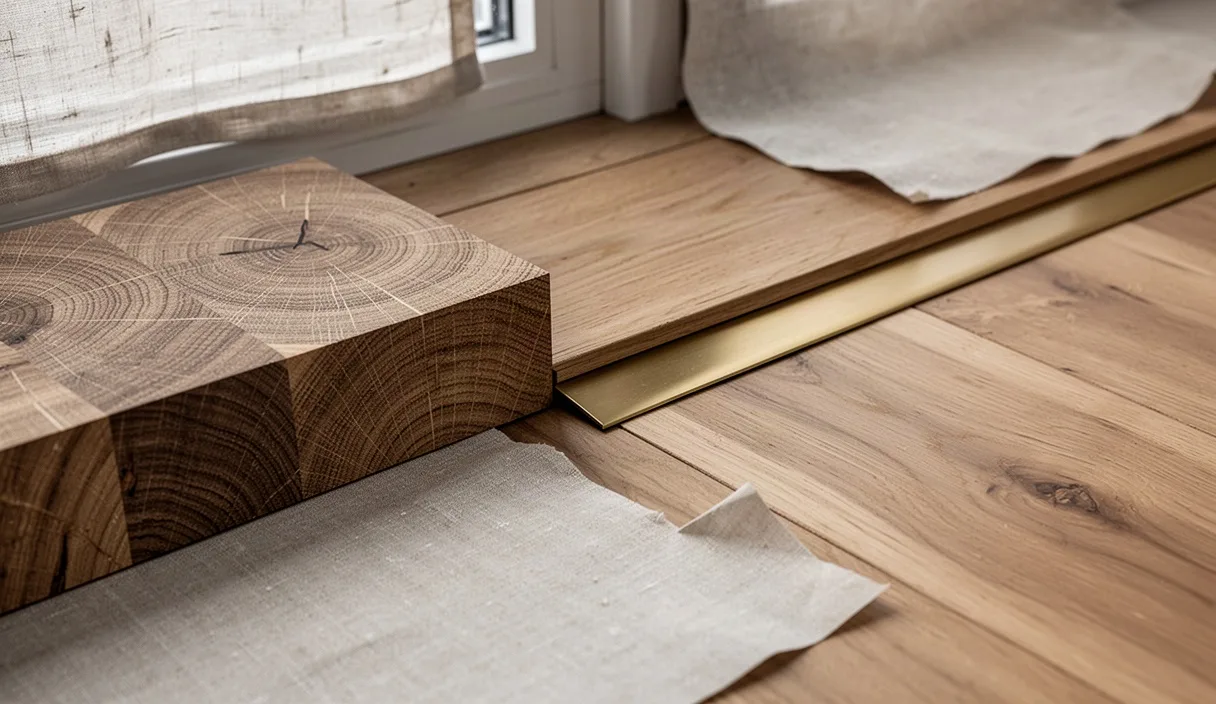
Wood flooring performance depends heavily on the orientation of cellular fibers relative to the wear surface. Edge-grain flooring, commonly cut radially or obliquely to growth rings, exposes the longitudinal walls of xylem cells. End-grain flooring, manufactured by cross-cutting timber perpendicularly across the trunk axis, orients these cellular tubes vertically so that foot traffic and mechanical loads bear directly onto the open ends of the fibers. This structural difference creates divergent mechanical properties, dimensional stability profiles, and wear patterns under standardized testing conditions.
Specifying between these two cuts requires evaluating compressive yield limits, localized point-load resistance, and environmental humidity ranges. While edge-grain boards distribute lateral stresses across interlocking cellular structures, end-grain blocks disperse vertical energy down the fiber axis, resembling an upright bundle of straw. Evaluating empirical durability metrics, including Janka ball-indentation modifications and ASTM D1037 compression protocols, clarifies which format matches specific interior environmental categories.
Fiber Orientation and Compressive Strength Ratings
Compressive strength parallel to the grain differs fundamentally from compressive strength perpendicular to the grain. In traditional edge-grain installations, loads press perpendicular to the cellular channels. Under high static loads, the tubular cell walls collapse sideways, resulting in plastic deformation or visible surface denting. End-grain assemblies support loads parallel to the longitudinal axes of the cells, utilizing the structural columns of the plant cell walls in their stiffest physical orientation.
Standard Janka hardness testing uses a 0.444-inch (11.28 mm) steel ball embedded to half its diameter into the wood. When applied to White Oak (Quercus alba), standard edge-grain cuts resist this indentation at an average rating of 1,360 pounds-force (lbf). The same species cut in an end-grain orientation records values ranging between 2,140 lbf and 2,480 lbf under identical testing moisture conditions of 8 percent moisture content. This constitutes an increase in localized puncture resistance exceeding 55 percent over conventional cuts.
| Species and Cut Format | Fiber Alignment to Traffic | Standard Janka Value (lbf) | Fiber Crush Failure Point (psi) |
|---|---|---|---|
| White Oak, Edge-Grain | Parallel / tangential to floor plane | 1,360 | 7,440 |
| White Oak, End-Grain | Perpendicular to floor plane | 2,290 | 10,880 |
| Douglas Fir, Edge-Grain | Parallel / tangential to floor plane | 660 | 7,230 |
| Douglas Fir, End-Grain | Perpendicular to floor plane | 1,180 | 9,120 |
The crush failure point demonstrates the difference between continuous dynamic resilience and catastrophic structural failure. In high-abuse industrial or commercial testing, dropped steel tools or rolling metal-wheel castors rupture the surface of edge-grain timber, causing fiber separation along annual ring boundaries. End-grain timber subjected to the same kinetic energy exhibits self-support characteristics: individual severed fibers separate slightly under impact and partially recover when exposed to maintenance oiling or ambient atmospheric recovery cycles.
Moisture Absorption Rates Across Exposed Cut Faces
The exposed orientation of xylem vessels alters moisture movement across the surface interface. Wood absorbs and desorbs ambient water through capillary action and vapor diffusion. Capillary conduction along the longitudinal grain can be up to 15 times faster than diffusion across transverse cell walls. Consequently, end-grain flooring functions as an open capillary bed across its entire wear surface.
During liquid surface exposure testing using ASTM D4442 protocols, unsealed end-grain White Oak absorbs 14.8 grams of liquid water per square foot within 30 minutes. In contrast, edge-grain White Oak absorbs 1.9 grams per square foot over the same duration. This characteristic causes rapid volumetric changes if relative humidity (RH) swings beyond stable thresholds.
- Longitudinal movement: End-grain blocks expand minimally in thickness (parallel to grain), usually fluctuating by less than 0.15 percent across a 30 percent to 80 percent RH change.
- Radial and tangential movement: Both horizontal axes of an end-grain block undergo transverse movement. An individual 4-inch by 4-inch block can expand up to 0.18 inches laterally across both surface dimensions under high humidity conditions.
- Edge-grain movement: Conventional edge-grain boards experience their primary movement across the width of the board, leaving board length stable and limiting the expansion axis to a single direction across the floor plane.
Because end-grain installations expand bidirectionally in the floor plane, perimeter expansion gaps must be calculated for both width and length of the floor field. Failing to maintain ambient relative humidity between 38 percent and 52 percent generates cumulative lateral expansion pressures capable of shearing perimeter anchors, buckling adjacent wall framing, or detaching subfloor substrates.
Adhesive Selection for High-Movement Substrates
The dimensional volatility of end-grain blocks requires an adhesive bed with balanced shear modulus and elastomeric elongation. Rigid setting adhesives, including standard polyvinyl acetate (PVA) cross-linking formulations or brittle urea-formaldehydes, crack under the localized expansion cycles of end-grain elements. When a single block shifts along its radial-tangential axes, a rigid bond-line transfers excessive stress directly to the surface layer of concrete or plywood subfloors, causing cohesive failure of the subfloor material.
Modified silane polymer (SMP) adhesives and single-component elastomeric polyurethanes provide the required elongation capacity. These adhesives accommodate joint movements up to 25 percent without adhesive rupture or substrate delamination. When installing edge-grain strip flooring, an adhesive with a higher shear modulus (stiffer bond) is often preferred to restrict lateral cupping. End-grain blocks, however, require high elongation properties to isolate each block as an independent movement cell.
Surface Preparation and Spread Rates
- Mechanical abrasion of the concrete slab to an International Concrete Repair Institute (ICRI) Concrete Surface Profile (CSP) of 2 or 3.
- Application of an epoxy moisture barrier if slab relative humidity exceeds 75 percent per ASTM F2170 in-situ probe testing.
- Application of an elastomeric polyurethane adhesive using a 1/4-inch by 1/4-inch V-notch trowel to yield a continuous bed thickness of 3/32 inch to 1/8 inch.
- Setting individual blocks into the wet adhesive with a minimum spacing of 1/16 inch between blocks to accommodate inter-block wax or mastic fill, preventing dry block-to-block friction.
Sanding Depth Limitations and Refinishing Intervals
Refinishing mechanics vary widely between edge-grain planks and end-grain assemblies. Conventional edge-grain installations present a predictable wear layer. A typical 3/4-inch solid edge-grain board features a usable wear profile of 0.28 inches down to the top of the tongue-and-groove joint. Sanding removes an average of 0.030 to 0.045 inches per restoration pass using a heavy continuous-belt drum sander. This yields an operational lifecycle of roughly six to eight full restoration sandings before the structural integrity of the tongue-and-groove joint is compromised.
End-grain blocks do not rely on tongue-and-groove milling; they are cut as solid rectangular or hexagonal solids with overall depths typically between 0.5 inches and 2.5 inches. Because no interlocking horizontal tongues exist, the functional wear layer extends down to roughly 0.25 inches above the adhesive plane, allowing significantly more physical material to be consumed over the life of the installation.
| Parameter | Standard Edge-Grain Plank | Solid End-Grain Block |
|---|---|---|
| Total Initial Depth | 0.75 inches | 1.50 inches |
| Usable Wear Thickness | 0.28 inches | 1.25 inches |
| Removal Per Drum Sanding Pass | 0.035 inches | 0.015 inches (rotary only) |
| Potential Refinishing Cycles | 6 to 8 cycles | 20 to 35 cycles |
Sanding end-grain requires distinct equipment configurations. Drum sanders running parallel to grain cut quickly into soft springwood; running a drum across end-grain creates severe deep tear-out along annual rings. End-grain must be surfaced using heavy multi-head rotary planetary sanding machines equipped with ceramic or silicon carbide abrasive discs. The grit sequence progresses slowly, typically 40-grit, 60-grit, 80-grit, and finishing at 100-grit or 120-grit. Because vertical fibers resist abrasive slicing, stock removal rates per pass are lower, reducing the depth lost to maintenance.
Selection Criteria Based on Daily Footfall Density
Specifying timber orientation must correlate directly with quantified occupancy loads, footwear types, rolling cart usage, and projected maintenance budgets. High-density retail centers, public transportation concourses, and commercial workshops generate mechanical stresses that cause early surface failure in standard edge-grain boards.
Class A: Ultra-High Density and Rolling Loads
Environments with foot traffic exceeding 5,000 pedestrians per day, or facilities operating hand trucks and equipment carts with solid polyurethane or steel casters, require end-grain timber. Under rolling dynamic loads of 250 pounds per square inch, edge-grain boards experience cellular crushing along their springwood rings, leading to hollow spots, surface delamination, and longitudinal splitting. End-grain blocks withstand these rolling lines of force without fiber fracture, displaying only minimal compression that hardens the surface through continuous compaction.
Class B: Moderate to High Pedestrian Traffic
Corridors, secondary commercial zones, and corporate lobbies with 1,000 to 4,900 pedestrian crossings daily perform well with edge-grain timber, provided the species exhibits a minimum Janka rating of 1,200 lbf. In these settings, point impacts from stiletto heels or aggregate grit carried on shoe soles produce shallow indentations. Edge-grain wood accepts surface film finishes, such as commercial-grade conversion varnishes or two-part waterborne polyurethanes, which resist dirtying and provide manageable daily cleaning protocols.
Class C: Controlled Internal Environments
Museum galleries, private residences, and quiet administrative offices experiencing under 1,000 crossings daily should prioritize edge-grain materials if environmental humidity cannot be tightly regulated. While end-grain can withstand the mechanical traffic of these spaces without difficulty, maintaining the strict 10 percent maximum RH band required to prevent block gapping is cost-prohibitive in light-duty applications. Edge-grain flooring remains the more stable and cost-effective specification when static loads are low and mechanical abuse is absent.
Common Mistakes
- Applying Film-Forming Finishes to End-Grain: Coating end-grain floors with continuous-film polyurethanes or epoxies prevents natural vapor transpiration. Moisture entering from below or through inter-block gaps causes milky clouding, blistering, and sheet delamination. End-grain requires penetrating natural oils, liquid waxes, or flexible penetrating resins.
- Using Perimeter Expansion Metrics Designed for Planks: Calculating perimeter clearance based on edge-grain standards (typically 0.5 inches along walls) results in floor failure for end-grain systems. End-grain assemblies require cumulative expansion relief calculated across both dimensions, often requiring compressible cork expansion joints around columns and perimeter allowances up to 1.5 inches for large floor spans.
- Wet-Mop Sanitation Protocols: Cleaning end-grain surfaces with wet mops introduces bulk water directly into open xylem capillaries. Moisture travels down the fibers, breaks the adhesive bond, and causes localized swelling (doming) of individual blocks. Maintenance must be restricted to treated dry-dust sweeping and dedicated damp-buffing using solvent-borne or oil-replenishing cleaning agents.
- Ignoring Wood Acclimation Thresholds: Setting blocks immediately upon site delivery without verifying moisture equilibrium leads to severe gaps. End-grain blocks must acclimate in open crates within the conditioned, HVAC-operational installation space until block moisture content reaches within 1.5 percent of the interior equilibrium target.
Practical Next Steps
When selecting timber orientations for high-demand interior environments, follow this sequential preparation schedule to ensure architectural specifications match physical field realities.
- Review Structural Deflection Criteria: Confirm the subfloor assembly meets a deflection limit of L/480 under design loads. End-grain block installations require higher substrate stiffness than edge-grain planks to preserve the elastomeric adhesive joint matrix. Consult a structural engineer if retrofitting over timber joist systems.
- Measure In-Situ Slab Moisture: Conduct ASTM F2170 relative humidity testing using embedded probes across multiple locations in the concrete slab. If readings exceed 75 percent relative humidity, specify a compatible epoxy mitigation primer before designing the adhesive system.
- Model the Site Humidity Envelope: Obtain historical HVAC logs for the building. If mechanical systems cannot hold indoor relative humidity within a 15 percent total variance year-round (for example, between 35 percent and 50 percent RH), specify edge-grain strip flooring to minimize lateral movement risks, or design additional mechanical humidification infrastructure.
- Procure Pre-Conditioned Material Samples: Order full-depth timber specimens for both configurations. Submit them to localized mock-up testing that replicates expected floor cleaning fluids, rolling loads, and anticipated chemical contact before finalizing construction documents.